Unified Defense SIEM Platform
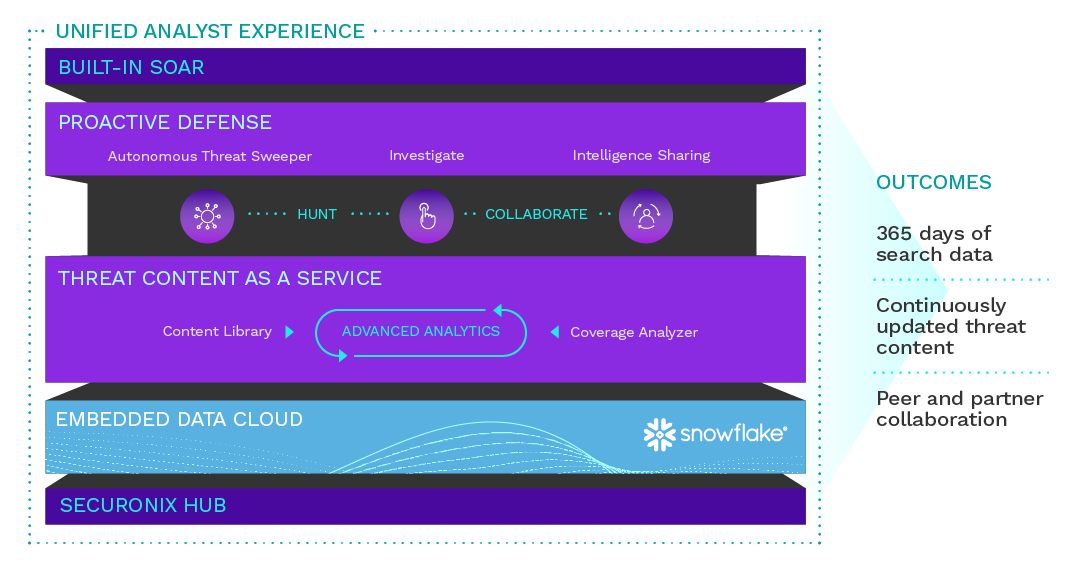
Get best-in-class threat defense with a SIEM that unifies threat detection, investigation, and response (TDIR) on Snowflake’s Data Cloud.
-
 Scalable
Data LakeGain fast access to one year of hot data for investigations, threat hunting, and response.
-
 Threat
Content-as-a-serviceUnlock broad threat coverage through continuously curated and delivered threat content that reduces false positives.
-
 Proactive
DefenseHarness the power of intelligence produced and shared by their peers and partners.
-
 Unified
TDIR ExperienceStreamline the analyst experience to deliver detection, investigation, and response in a single interface.
Flexible Deployment for Every Organization
-
 Securonix SaaS
Securonix delivers an analytics-driven SIEM and UEBA as a pure cloud solution without compromise.
-
 Bring Your Own Cloud
Keep your data in your cloud environment while unlocking powerful threat detection and response.
-
 Managed Service
Securonix solution powers and is delivered by 70+ MSSP and MDR partners globally.

Named a 2023 Customers’ Choice for SIEMCheck out our Gartner Peer Insight reviews and learn why Securonix was named an overall Customers’ Choice for SIEM. |
|

Customer Spotlight: Alberta Health Services
Alberta Health Services reduces false positives by 90% with Securonix.

Customer Spotlight: LeaseLock
LeaseLock won more business by improving detection and compliance for PII and financial data.

Global Infrastructure Leader Gains Multi-Cloud Visibility and Threat Detection
Removed silos and reduced complexity by analyzing all logs within Snowflake and only paid for compute resources used.

Holding Company Stops Phishing and Data Exfiltration with a Single Platform
Centralized visibility and threat detection across multiple business units without requiring a large security team.

Ready for a Demo?
Securonix collects massive volumes of data in real time, detects advanced threats using innovative machine learning algorithms, enables you to quickly investigate the alerts that matter the most, and provides actionable security intelligence for an automated response.
By clicking submit you agree to our Privacy Policy.
By clicking submit you agree to our Privacy Policy.
By clicking submit you agree to our Privacy Policy.